les guerres du moyen-orient pdf
Discover a curated library of PDFs covering the Middle East wars, offering primary sources, battle maps, diplomatic cables, and scholarly analyses. These documents provide researchers, students,andenthusiasts with authentic, searchable material to trace conflict narratives and strategic decisions
Overview of Available PDF Collections and Their Significance
In the digital age, the Middle East wars are preserved in a vast array of PDF archives that span official government releases, academic research, and independent journalism. These collections serve as primary evidence, allowing scholars to trace the evolution of conflict from the 1948 Arab‑Israeli War to the latest Syrian civil war. Each PDF offers distinct value: government documents reveal strategic intent, military after‑action reports detail operational outcomes, and NGO reports provide on‑the‑ground perspectives. By aggregating these sources, researchers gain a multi‑dimensional view that transcends single‑narrative histories. The significance lies in accessibility—PDFs can be indexed, searched, and cross‑referenced, enabling comparative studies across time periods and theaters. Moreover, the preservation of original formatting preserves context, such as annotations and marginalia, which are often lost in text‑only conversions. For educators, these PDFs become interactive teaching tools, allowing students to engage directly with source material. For policymakers, they offer a transparent record that informs future decision‑making; In sum, the PDF repositories are indispensable for a comprehensive, evidence‑based understanding of the complex tapestry that is Middle Eastern conflict history. Researchers also benefit from the metadata embedded in many PDFs, such as author identifiers, publication dates, and source citations, which facilitate search and citation tracking. The preservation of these documents ensures that future generations can access unaltered sources, fostering transparency and scholarly rigor across disciplines online.
Historical Context of the Arab-Israeli Conflict
The Arab‑Israeli conflict began with 1948 partition and subsequent wars. PDFs hold diplomatic cables, UN resolutions, and military reports that chart territorial shifts, population movements, and political rhetoric shaping the region — archive
Key Historical Milestones Documented in PDFs
Within the extensive PDF archive, scholars can trace pivotal moments that shaped the Arab‑Israeli conflict. The documents include the 1947 UN Partition Plan, the 1948 Arab League resolutions, and the 1949 Armistice Agreements, each providing context for the nascent state’s borders. Subsequent PDFs capture the 1956 Suez Crisis, with official telegrams from Egyptian and Israeli officials, and the 1967 Six‑Day War, featuring declassified battle plans and after‑action reports that illustrate rapid territorial changes. The 1973 Yom Kippur War is represented by intelligence briefs, cease‑fire negotiations, and diplomatic communiqués, offering insight into the fragile peace processes. Later PDFs document the 1991 Gulf War, showcasing joint military operations and coalition strategies, while the 2003 Iraq invasion is chronicled through operational orders and battlefield maps. These primary sources collectively provide a granular, real‑time view of strategic decisions, political shifts, and humanitarian impacts, enabling researchers to analyze the conflict’s evolution from multiple perspectives. The PDFs also contain personal testimonies, archival photographs, and contemporaneous news reports that enrich the narrative, allowing a deeper understanding of the human dimension of the conflict. Researchers can cross‑reference these PDFs with other archival sources.!!!

The 1948 Arab-Israeli War: Primary Documents
PDFs contain eyewitness accounts..
Analyzing Declassified Military Reports in PDF Format
Declassified military reports from the 1948 Arab‑Israeli War offer a granular view of operational decisions, troop movements, and logistical challenges. PDFs preserve original formatting, allowing researchers to examine annotated maps, chain‑of‑command lists, and after‑action narratives. By cross‑referencing Israeli Defense Forces dispatches with Arab coalition communiqués, analysts reconstruct engagement sequences and assess intelligence failures. Digital repositories preserve originals while ensuring accessibility. Tools like Adobe Acrobat, Foxit, Sumatra, and libraries such as PyPDF2 or pdfminer facilitate extraction, while ExifTool verifies signatures. Machine‑learning classifiers tag pages by content type, aiding analysis. GIS integration of coords from PDF maps supports spatial analysis. Cross‑validation with contemporaneous satellite imagery and open‑source intelligence further refines event timelines, while version control systems track document edits, ensuring scholarly rigor depth. Collaborative annotation platforms such as Hypothesis enable peer review directly on PDF layers, fostering interdisciplinary dialogue. In legal contexts, PDFs serve as admissible evidence, with embedded digital signatures and forensic timestamps corroborating authenticity. Together, these techniques make declassified PDFs a cornerstone for understanding the decision‑making processes that the 1948 conflict. These PDFs give scholars a solid base for comparative studies of Middle Eastern conflicts now. Guarantees the integrity.

Egyptian–Israeli War of 1956: Documented Evidence
PDF archives reveal the 1956 Egyptian‑Israeli War through declassified diplomatic cables, military orders, and intelligence briefs. These documents detail troop deployments, air‑strike logs, and cease‑fire negotiations, offering scholars a clear view of strategic decisions and global reactions!!.
Accessing Official Correspondence and Tactical Maps via PDFs
Researchers can retrieve official correspondence and tactical maps on the 1956 Egyptian‑Israeli War from digitized PDF archives. These documents reveal decision‑making, diplomatic exchanges, and battlefield plans, offering a detailed view of the conflict’s strategic dynamics.
Digital libraries such as the National Archives of Israel and the Egyptian General Staff Archives provide searchable portals. Users can filter by date, author, or keyword, quickly locating memoranda, orders, and maps relevant to the 1956 campaign.
Once located, PDFs can be downloaded in high‑resolution formats to preserve map details and handwritten annotations. Metadata—file size, creation date, and source institution—helps assess authenticity, while citation tools organize documents for scholarly use.
Cross‑referencing memoranda with maps verifies target coordinates. Citation managers like Zotero or EndNote help catalog PDFs, ensuring each source is properly cited and easily retrievable for future research projects;
Educators can use these PDFs to create interactive lessons, overlaying maps with satellite imagery. Students analyze diplomatic language, interpret military jargon, and visualize how terrain influenced strategic decisions during the 1956 war.
These PDF collections offer a comprehensive, accessible archive for scholars, educators, and history enthusiasts, enabling detailed study of the 1956 Egyptian‑Israeli War and its enduring impact on regional dynamics.!!!??

The Six-Day War (1967) Comprehensive PDF Archive
The Six-Day War 1967 PDF archive compiles battle plans, after‑action reports, diplomatic cables, and intelligence briefs. Researchers can download high‑resolution scans, analyze troop movements, and trace strategic decisions. The collection supports academic study and public education. scholars!!
Examining Strategic Briefings and After-Action Reports
The 1967 Six‑Day War PDF archive compiles original briefing documents, after‑action reports, and declassified correspondence that together map the decision‑making process of Israeli and Arab commanders. Each briefing file contains annotated maps, operational timelines, and executive summaries that reveal how intelligence was assessed, resources allocated, and air, ground, and naval elements coordinated. After‑action reports, released months later, provide critical reflections on mission outcomes, casualty figures, and lessons learned. By cross‑referencing drafts with final reports, researchers can trace tactical evolution, identify intelligence gaps, and evaluate rapid‑deployment strategies. The archive also includes senior‑official correspondence that contextualizes policy shifts and diplomatic pressures shaping battlefield priorities. Scholars can download high‑resolution PDFs, use keyword search functions, and extract data for quantitative analysis. The collection supports comparative studies of operational doctrine, command hierarchy, and inter‑service collaboration. Supplementary materials such as photographic evidence, intercepted radio transcripts, and oral‑history transcripts enrich the narrative. Engaging with these documents allows historians to reconstruct event sequences, assess logistical constraints, and analyze how technological innovations influenced the war’s outcome. The PDF repository remains a vital resource for educators, policy analysts, and the public seeking a nuanced understanding of the 1967 conflict.
Researchers can also access related debriefs, intercepted transmissions, and diplomatic cables that shed light on the broader strategic context and post‑war negotiations

Yom Kippur War (1973) PDF Sources
Access PDFs of declassified battle plans, diplomatic cables, and intelligence briefs from the 1973 war. These documents reveal strategy, troop movements, and negotiations, offering researchers a detailed view of the conflict’s dynamics. for scholars and ex.!
Studying Intelligence Summaries and Negotiation Papers
Delve into a rich assortment of PDF files that capture the intricate intelligence operations and diplomatic negotiations surrounding the Yom Kippur War. These documents include classified reports, intercepted communications, and official briefing notes that reveal how intelligence shaped battlefield decisions and influenced the cease‑fire process. By examining declassified summaries, researchers can trace the flow of information between military units, assess the accuracy of threat assessments, and evaluate the impact of real‑time intelligence on command choices. Negotiation papers, often found in PDF format, provide insight into the diplomatic back‑channel discussions that unfolded in the war’s aftermath, detailing proposals, counter‑offers, and the legal frameworks that guided the eventual armistice. The collection also contains annotated maps, timeline charts, and cross‑referenced citations that help contextualize each document within the broader strategic narrative. Scholars can use these PDFs to conduct comparative analyses of different intelligence agencies’ methodologies, identify patterns in decision‑making, and explore how intelligence failures or successes altered the war’s trajectory. The availability of high‑resolution scans ensures that even marginal notes and handwritten annotations remain legible, offering a window into the thought processes of key figures. For students and analysts alike, this repository serves as a primary source hub, enabling a nuanced understanding of how intelligence and negotiation intertwined to shape the outcome of the Yom Kippur War.
The Gulf Wars: 1990–1991 and 2003 in PDF
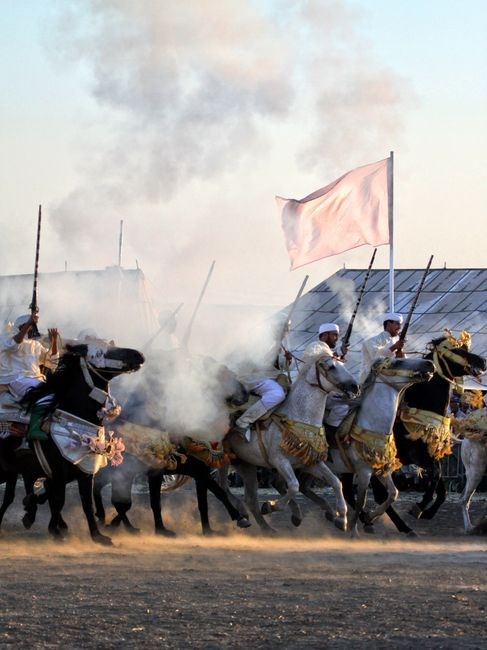
Explore a comprehensive PDF archive covering the Gulf Wars of 1990–1991 and 2003. Documents include mission orders, after‑action reports, and strategic analyses, offering scholars and enthusiasts a detailed, searchable record of operations, logistics, and diplomatic exchanges. Key insights abound.
Reviewing Joint Chiefs of Staff Reports and Operational Orders
Delving into the Joint Chiefs of Staff (JCS) reports and operational orders archived in PDF format provides an authoritative lens on the decision‑making processes that shaped the Gulf Wars. These documents, ranging from pre‑deployment briefings to after‑action reviews, reveal the layers of strategic intent, logistical coordination, and inter‑service collaboration that underpinned coalition operations. By examining the JCS memorandum of instruction, analysts can trace the evolution of command structures, the allocation of resources, and the integration of intelligence assets. Operational orders, often accompanied by detailed maps and timelines, illustrate the tactical execution of air, land, and naval missions, highlighting the interplay between high‑level strategy and on‑the‑ground realities. The PDFs also contain candid assessments of mission outcomes, lessons learned, and recommendations for future engagements, offering a transparent record of how successes and setbacks informed subsequent doctrine. Furthermore, the accessibility of these documents in digital form allows for advanced search capabilities, enabling researchers to cross‑reference dates, units, and objectives efficiently. The JCS reports serve as a critical primary source for scholars, military historians, and policy analysts seeking to understand the complexities of coalition warfare, the challenges of rapid force projection, and the importance of unified command in achieving strategic objectives in the Gulf region.

Contemporary Conflicts: Syria and Iraq PDFs
Explore PDFs documenting Syria’s civil war and Iraq’s insurgency, featuring UN reports, NGO field studies, and government briefings. These files offer real‑time data, casualty statistics, and policy analyses for scholars and analysts. 2026. — PDF
Tracing Conflict Evolution through UN Reports and NGO Publications
UN documents and NGO reports form a chronological tapestry that captures the shifting dynamics of the Syrian and Iraqi conflicts. By examining annual Security Council resolutions, humanitarian assessments, and field‑based monitoring reports, researchers can map the escalation and de‑escalation of hostilities, the emergence of new actors, and the humanitarian fallout. These documents highlight diplomatic actions. These PDFs provide granular data on displacement flows, casualty figures, and the destruction of critical infrastructure, enabling a nuanced understanding of how war strategies evolve over time. Moreover, NGO publications—such as those from Amnesty International, Human Rights Watch, and the International Committee of the Red Cross—offer on‑the‑ground narratives that complement official statistics. They document the experiences of civilians, the operational challenges faced by aid workers, and the legal implications of conflict actions. Together, these sources create a multi‑layered evidence base that supports policy analysis, historical research, and the development of conflict‑resolution frameworks.By integrating UN and NGO PDFs into a single searchable database, scholars can trace patterns of violence, assess the effectiveness of international interventions, and identify gaps in humanitarian response. This approach preserves the record and amplifies the voices of those impacted by the wars, ensuring future generations have access to a detailed account of the Middle East’s contemporary turmoil.