world history and geography mcgraw hill pdf
McGraw Hill’s World History and Geography presents a robust, interactive curriculum, emphasizing time, place, and skill development through document-based questions and critical thinking;
This renowned authorship delivers a streamlined Student Edition, built around Essential Questions, fostering historical understanding and powerful analytical writing capabilities for students.
Overview of the Textbook
McGraw Hill’s World History and Geography, available as a Student Edition and in digital formats, provides a comprehensive exploration of global history. The textbook meticulously connects historical events with their geographical contexts, fostering a deeper understanding of how location influences civilization’s development.
It’s designed to emphasize the crucial relationship between time and place, utilizing document-based questions (DBQs) to hone critical thinking skills. The curriculum actively builds historical understanding, equipping students with the tools for powerful analysis and effective writing. Several editions exist, including the 2013 version (ISBN 9780078933141) and earlier iterations, with updates continually refined.
Furthermore, resources like the Internet Archive offer free access to downloadable PDFs of related materials, including the McGraw-Hill Illustrated World History, supplementing the core textbook experience.
Target Audience and Grade Level
McGraw Hill’s World History and Geography is primarily designed for students in junior and senior high school, typically encompassing grades 9 through 12. The curriculum’s complexity and depth cater to a diverse range of learning abilities within these grade levels, offering a foundational understanding of global historical events.
The textbook’s approach, emphasizing critical thinking and document analysis, is particularly beneficial for students preparing for advanced placement (AP) World History or similar college-level courses. Supplementary PDF worksheets, such as those focusing on European Explorers, are specifically tailored for this age group.
The materials aim to engage students with challenging content, promoting analytical skills and a nuanced perspective on world history, making it suitable for both standard and honors-level history classes.
Key Features and Approach
McGraw Hill’s World History and Geography distinguishes itself through its emphasis on the interconnectedness of time and place, fostering a holistic understanding of historical events. A core feature is the integration of document-based questions (DBQs), designed to hone students’ analytical and critical thinking skills.
The textbook’s approach centers around “Essential Questions,” guiding students to explore key themes and concepts. Available PDF resources, like worksheets on war writing, supplement the core curriculum, offering focused practice.
Furthermore, the program prioritizes the development of strong analytical and writing skills, preparing students for success in higher education and beyond. The availability of digital resources enhances the learning experience, providing interactive tools and assessments.

Content Coverage: Historical Periods
This curriculum comprehensively covers history, spanning ancient civilizations, medieval times, the Renaissance, the Age of Exploration, Enlightenment revolutions, and industrial imperialism.
Ancient Civilizations
McGraw Hill’s World History and Geography delves deeply into the foundational eras of ancient civilizations, providing students with a comprehensive understanding of their origins, development, and lasting legacies. The textbook meticulously examines the key characteristics of early societies, including Mesopotamia, Egypt, the Indus Valley, and ancient China, exploring their political structures, social hierarchies, religious beliefs, and technological innovations.
Furthermore, the curriculum dedicates significant attention to the classical civilizations of Greece and Rome, analyzing their contributions to philosophy, democracy, law, art, and literature. Students will investigate the rise and fall of empires, the impact of geographical factors on societal development, and the interconnectedness of ancient cultures through trade and cultural exchange. The program emphasizes critical thinking skills by utilizing document-based questions and encouraging students to analyze primary source materials to form informed conclusions about the ancient world.
Medieval Times and Renaissance
McGraw Hill’s World History and Geography meticulously charts the transition from the classical world into the Medieval period, exploring the fragmentation of empires and the rise of new political and social structures in Europe and beyond. The curriculum examines the development of feudalism, the influence of the Catholic Church, and the impact of events like the Crusades on medieval society.
A significant portion is dedicated to the Renaissance, a period of renewed interest in classical art, literature, and philosophy. Students will analyze the causes and consequences of this cultural rebirth, focusing on key figures like Leonardo da Vinci and Michelangelo, and the flourishing of humanism. The textbook emphasizes the interconnectedness of political, economic, and cultural factors during this transformative era, fostering critical thinking through document-based questions and analysis of primary sources.
The Age of Exploration
McGraw Hill’s World History and Geography comprehensively covers the Age of Exploration, detailing the motivations – economic, religious, and political – that propelled European powers to venture across the globe. The curriculum meticulously examines the technological advancements, such as improved shipbuilding and navigational tools, that made these voyages possible, alongside the complex encounters between Europeans and indigenous populations.
Students will analyze the impact of exploration on global trade networks, the Columbian Exchange, and the rise of colonialism. The textbook utilizes primary source documents and critical thinking exercises to encourage students to evaluate the consequences of exploration from multiple perspectives, including those of the explorers, the colonized, and the environment. It highlights the lasting legacies of this era, shaping the modern world.
The Enlightenment and Revolutions
McGraw Hill’s World History and Geography delves into the transformative period of the Enlightenment, exploring its core tenets of reason, individualism, and human rights. The curriculum meticulously examines the key Enlightenment thinkers – Locke, Rousseau, Montesquieu – and their profound influence on political and social thought. Students will analyze how Enlightenment ideals fueled revolutionary movements across the globe, particularly the American and French Revolutions.
The textbook investigates the causes, events, and consequences of these revolutions, emphasizing the concepts of liberty, equality, and popular sovereignty. It utilizes document-based questions and critical thinking exercises to encourage students to evaluate the complexities of revolutionary change and its lasting impact on modern political systems and societal structures.
The Industrial Revolution and Imperialism
McGraw Hill’s World History and Geography comprehensively covers the sweeping changes brought about by the Industrial Revolution, beginning in Great Britain and spreading globally. The curriculum details the technological innovations – steam engine, power loom – that spurred unprecedented economic growth and societal transformation, including urbanization and new social classes.
Simultaneously, the textbook explores the rise of imperialism, examining the motivations – economic, political, and cultural – behind European expansion into Africa and Asia. Students will analyze the consequences of imperialism for both colonizers and colonized populations, including exploitation, resistance, and the reshaping of global power dynamics. Document-based questions and critical thinking exercises promote a nuanced understanding of this complex era.

Geographical Focus within the Textbook
McGraw Hill integrates world map skills and regional geography, focusing on Europe, Asia, Africa, and the Americas, to contextualize historical events.
World Map Skills and Analysis
McGraw Hill’s World History and Geography places significant emphasis on developing students’ world map skills, crucial for understanding the spatial dimensions of historical events and processes.
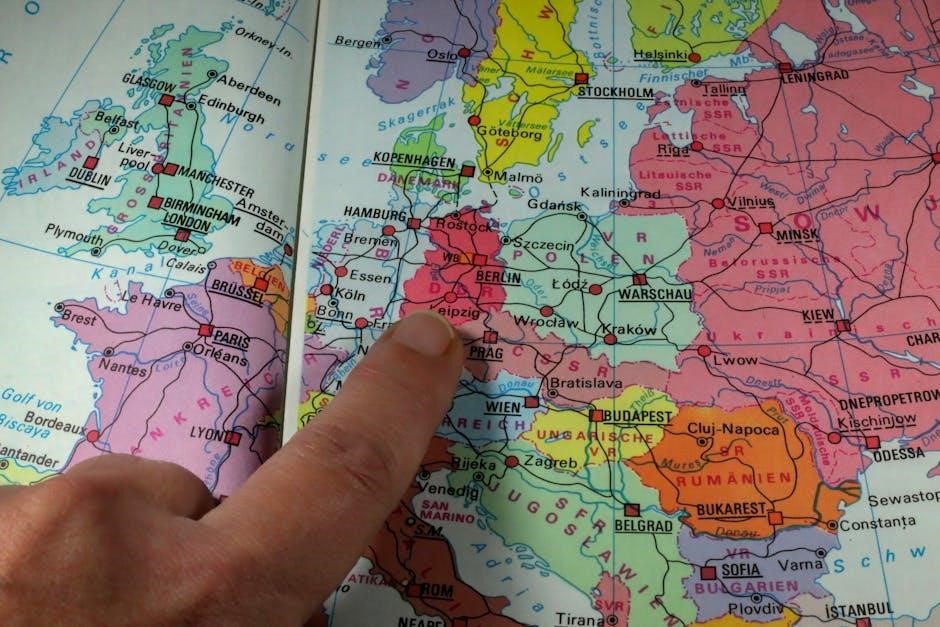
The textbook doesn’t just present maps as static images; it actively encourages analysis of geographical features, their impact on civilizations, and the interconnectedness of different regions throughout history.
Students learn to interpret various map projections, analyze population densities, identify key geographical features like rivers, mountains, and climate zones, and understand how these factors influenced migration patterns, trade routes, and conflict.
Furthermore, the curriculum fosters the ability to synthesize geographical information with historical data, allowing students to draw informed conclusions about the relationship between place and time, ultimately enhancing their overall historical comprehension.
Regional Geography: Europe
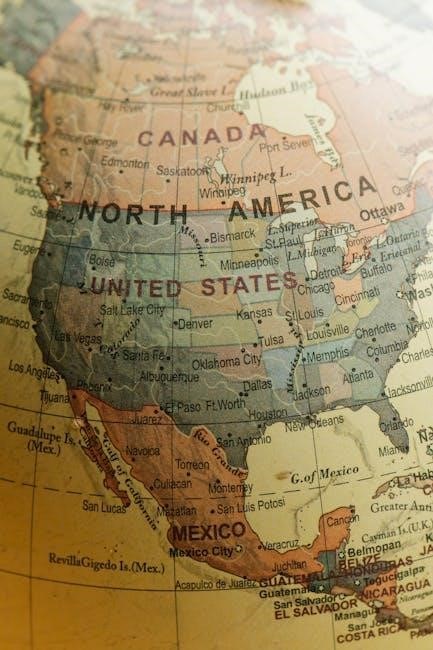
McGraw Hill’s World History and Geography provides a comprehensive exploration of Europe, examining its diverse physical landscapes, historical development, and cultural influences.
The textbook delves into the geographical features shaping European history – from the Alps and the fertile plains to the numerous rivers and coastlines – and their impact on settlement patterns and economic activities.
Students explore the rise and fall of empires, the Renaissance, the Reformation, and the Industrial Revolution, all within the context of Europe’s unique geographical setting.
The curriculum also highlights the complex interplay between European nations, examining themes of nationalism, conflict, and cooperation, alongside the continent’s lasting contributions to art, philosophy, and political thought, fostering a nuanced understanding of Europe’s global role.
Regional Geography: Asia
McGraw Hill’s World History and Geography offers an in-depth study of Asia, encompassing its vast and varied landscapes, ancient civilizations, and modern transformations.
The textbook meticulously examines Asia’s diverse geographical features – from the Himalayas and the Tibetan Plateau to the expansive river systems and coastal regions – and their influence on population distribution and economic development.
Students investigate the rise of empires like those in China and India, the Silk Road’s impact, and the spread of religions such as Buddhism and Islam, all within the context of Asia’s unique geographical setting.
The curriculum also explores contemporary issues facing Asia, including economic growth, political dynamics, and cultural exchange, fostering a comprehensive understanding of this pivotal continent’s global significance.
Regional Geography: Africa
McGraw Hill’s World History and Geography provides a comprehensive exploration of Africa, delving into its diverse landscapes, rich history, and complex contemporary challenges.
The textbook meticulously examines Africa’s varied geographical features – from the Sahara Desert and the Nile River to the rainforests of the Congo Basin and the savannas of East Africa – and their impact on human settlement and development.
Students investigate the rise and fall of ancient kingdoms like Egypt, Kush, and Mali, the impact of the transatlantic slave trade, and the struggles for independence in the 20th century, all within Africa’s geographical context.
The curriculum also addresses modern issues facing Africa, including economic development, political instability, and environmental concerns, fostering a nuanced understanding of this dynamic continent’s global role.
Regional Geography: Americas
McGraw Hill’s World History and Geography offers an in-depth study of the Americas, encompassing North, Central, and South America, and their interwoven histories and geographical influences.
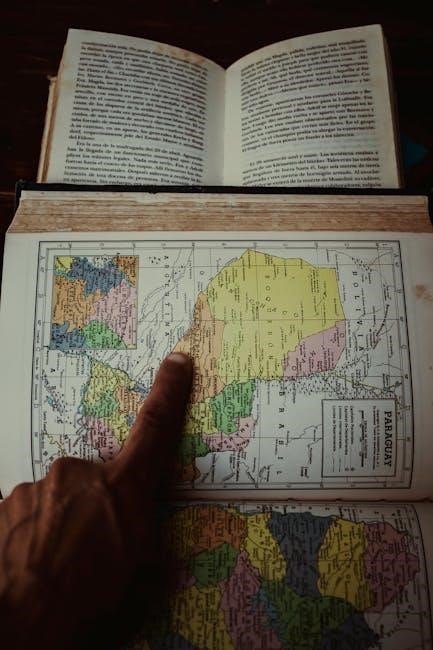
The textbook meticulously analyzes the diverse landscapes – from the Rocky Mountains and the Amazon rainforest to the Great Plains and the Caribbean islands – and their impact on settlement patterns and economic activities.
Students explore the pre-Columbian civilizations of the Maya, Aztec, and Inca, the European colonization of the Americas, and the subsequent development of independent nations, all viewed through a geographical lens.
The curriculum also addresses contemporary issues facing the Americas, including urbanization, migration, economic disparities, and environmental challenges, fostering a comprehensive understanding of this hemisphere’s complexities.
Pedagogical Tools and Resources
McGraw Hill provides Document-Based Questions (DBQs), critical thinking exercises, and Essential Questions to enhance learning and analytical skills for students;
Document-Based Questions (DBQs)
McGraw Hill’s World History and Geography curriculum heavily emphasizes the use of Document-Based Questions, or DBQs, as a core pedagogical tool. These DBQs are meticulously designed to challenge students to analyze primary and secondary source documents, fostering critical thinking and historical interpretation skills.
Students aren’t simply asked to recall facts; instead, they are prompted to synthesize information from multiple sources, evaluate perspectives, and construct well-supported arguments. This approach mirrors the work of historians, preparing students for advanced academic study and informed civic engagement. The textbook provides guidance on document analysis, evidence evaluation, and essay construction, equipping students with the necessary skills to succeed with DBQs.
Furthermore, the inclusion of DBQs encourages a deeper understanding of historical context and nuance, moving beyond rote memorization towards a more sophisticated grasp of the past.
Critical Thinking Exercises
McGraw Hill’s World History and Geography actively cultivates critical thinking skills through a variety of engaging exercises integrated throughout the curriculum. These aren’t simply add-ons, but rather are woven into the fabric of each lesson, prompting students to move beyond surface-level comprehension.
Exercises challenge students to analyze cause-and-effect relationships, evaluate different interpretations of events, and make informed judgments based on evidence; The textbook encourages students to question assumptions, identify biases, and consider multiple perspectives, fostering intellectual curiosity and analytical rigor.
These exercises prepare students not only for academic success but also for navigating the complexities of the modern world, equipping them with the skills to become informed and discerning citizens.
Essential Questions and Learning Objectives
McGraw Hill’s World History and Geography curriculum is strategically structured around compelling Essential Questions, designed to spark student inquiry and drive deeper understanding of historical concepts. These overarching questions aren’t merely prompts for recall; they encourage students to synthesize information and construct meaningful interpretations.
Each chapter clearly outlines specific Learning Objectives, providing a roadmap for student achievement. These objectives are directly aligned with the Essential Questions, ensuring a cohesive and purposeful learning experience. Students are guided to not only know historical facts, but to understand their significance and connections.
This approach fosters a more engaging and effective learning environment, promoting both knowledge acquisition and critical thinking skills.
Digital Resources and Online Support
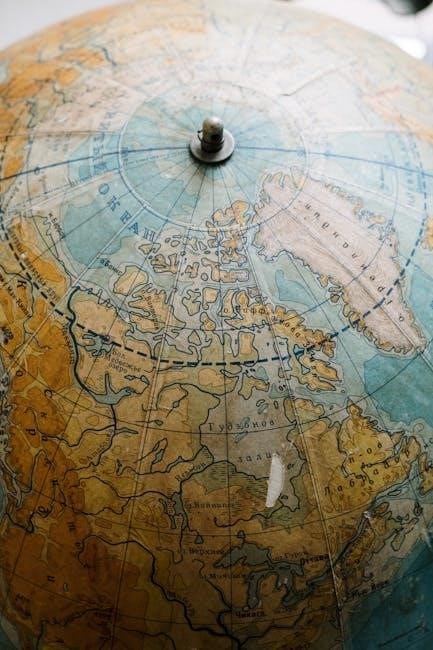
McGraw Hill offers online textbook access, interactive maps, and timelines, alongside assessment tools and practice quizzes, enhancing the learning experience digitally.
Online Textbook Access
McGraw Hill’s World History and Geography Student Edition is increasingly available through convenient online platforms, offering students flexible learning options beyond the traditional textbook format. The Internet Archive provides access to digitized versions, including the “McGraw-Hill illustrated world history,” allowing for free download, borrowing, and streaming – identified by urn:oclc:record:1150285884.
Furthermore, access to specific editions, like the one copyrighted in 2013 (ISBN 9780078933141) and earlier versions from 2011, can be found through various online resources. Digital access facilitates studying anytime, anywhere, and supports diverse learning styles with features like searchable text and potential interactive elements, depending on the platform. Students can benefit from readily available materials, supplementing classroom instruction and promoting independent exploration of historical content.
Interactive Maps and Timelines
McGraw Hill’s World History and Geography curriculum benefits significantly from the integration of interactive maps and timelines, enhancing student comprehension of complex historical events and geographical contexts. While specific details regarding interactive features within the PDF versions available on platforms like the Internet Archive aren’t explicitly stated, the core textbook emphasizes the relationship between “time and place.”
These digital tools likely allow students to visually trace historical movements, explore regional changes, and understand the chronological order of significant events. Interactive maps could showcase trade routes, empires’ expansion, or population shifts, while dynamic timelines would illustrate the interconnectedness of historical periods. Such resources transform static information into engaging experiences, fostering deeper learning and analytical skills, crucial for mastering world history and geography.
Assessment Tools and Practice Quizzes
McGraw Hill’s World History and Geography program prioritizes evaluating student understanding through varied assessment methods. While the extent of assessment tools directly embedded within freely available PDF versions on platforms like the Internet Archive is unclear, the textbook’s design emphasizes building “powerful analysis and writing skills.”
The curriculum likely incorporates document-based questions (DBQs) and critical thinking exercises, serving as formative and summative assessments. Practice quizzes, potentially available alongside the textbook or through supplemental digital resources, would reinforce key concepts and prepare students for more comprehensive evaluations. These tools aim to measure not only factual recall but also the ability to interpret historical evidence, construct arguments, and demonstrate a nuanced understanding of world history and geographical relationships.
Specific Editions and ISBNs
Notable editions include the 2013 version (ISBN 9780078933141) and a 2011 edition, with recent updates continually refining the curriculum’s content.
2013 Edition (ISBN 9780078933141)
The 2013 edition of McGraw Hill’s World History and Geography, identified by ISBN 9780078933141, represents a significant iteration in this widely-used curriculum. This Student Edition focuses on presenting world history in an accessible and engaging manner, emphasizing the interconnectedness of global events and geographical contexts.
It’s designed to cultivate critical thinking skills through the integration of document-based questions (DBQs) and analytical exercises. The textbook’s structure revolves around Essential Questions, promoting a deeper understanding of historical concepts and encouraging students to develop robust writing and analytical abilities. This edition, available through various retailers like Amazon, provides a comprehensive overview of world history, suitable for high school students and beyond. Furthermore, digital access options and supplementary resources enhance the learning experience.
2011 Edition
The 2011 edition of McGraw Hill’s World History and Geography, while an earlier iteration, continues to offer a valuable resource for students exploring global history and its geographical underpinnings. This edition, predating the 2013 revision, shares the core principles of the series – a focus on the relationship between time, place, and historical events.
It emphasizes the development of critical thinking skills through document analysis and encourages students to build strong analytical and writing capabilities. Accessible through platforms like the Internet Archive, offering both borrowing and streaming options, this edition provides a comprehensive historical overview. Though superseded by later versions, it remains a useful tool for educators and learners seeking a foundational understanding of world history and geography, particularly given its availability as a free digital resource.
Recent Editions and Updates
Contemporary editions of McGraw Hill’s World History and Geography, such as those available on Amazon (ISBN 9780076648689), represent ongoing refinements to the curriculum. While specific update details aren’t explicitly outlined in readily available sources, the program consistently emphasizes document-based questions, critical thinking exercises, and essential questions to guide learning.
The continued availability of digital resources, including interactive maps and timelines, alongside assessment tools, signifies a commitment to modern pedagogical approaches. The Internet Archive also hosts versions, offering access to historical iterations. These newer editions likely incorporate updated scholarship and perspectives, building upon the foundational strengths of the series to provide students with a current and comprehensive understanding of global history and geography, accessible in various formats.
Availability and Access Options
McGraw Hill’s World History and Geography is available for purchase on platforms like Amazon, and free access exists via the Internet Archive for select editions.
Purchasing Options (Amazon, etc.)
McGraw Hill’s World History and Geography, Student Edition, is readily available through major online retailers such as Amazon. Currently, the ISBN 9780076648689 corresponds to a purchasable edition on Amazon, offering both new and used copies depending on availability and seller conditions.
Pricing varies based on the edition and condition, with newer editions generally commanding a higher price point. Prospective buyers should carefully review the edition details and seller ratings before completing a purchase. Beyond Amazon, other online booksellers may also carry this textbook, providing opportunities to compare prices and shipping options.
It’s advisable to check for potential textbook rental options, which can be a cost-effective alternative for students needing temporary access. Furthermore, exploring college bookstore websites might reveal additional purchasing avenues or bundled deals.
Free Download and Streaming (Internet Archive)
The Internet Archive provides access to digitized versions of McGraw Hill World History and Geography, offering both free download and streaming options. Specifically, “The McGraw-Hill illustrated world history” is available for borrowing and streaming, identified by the OCLC record number 1150285884.
Additionally, “World History and Geography” by MCGRAW HILL is accessible through the Internet Archive, with an associated epub identifier of ced409f4-b38e-4633-96b0-d35ea49f8cd9 and a lcpdf identifier of 5358c961-f9f2-4f7c-959a-cfedfd05a1f9.
These resources allow users to explore the textbook content without purchase, though access may be subject to lending limitations or digital rights management. Users can access these materials directly through the Internet Archive website, utilizing its search functionality to locate the specific textbook edition.
PDF Worksheets and Handouts
Numerous PDF worksheets and handouts supplementing McGraw Hill World History and Geography are available online, particularly geared towards junior and senior high school students. Glencoe National Geographic McGraw-Hill offers student handouts focused on European Explorers, presented as printable chart worksheets designed to enhance learning during that historical period.
Further resources include “Fighting Words: War Writing Worksheets,” an assortment of printables – encompassing matching exercises and more – intended to introduce students to essential military terminology. These materials aim to support classroom instruction and provide students with opportunities for independent practice and review.
These downloadable PDFs offer convenient tools for educators and learners alike, reinforcing key concepts and skills related to world history and geographical studies.